Variance Analysis
Why It Matters
Variance tracking is manual and time-consuming
Teams rely on spreadsheets and manual calculations to compare actuals against plan.
Lack of clarity into what drive changes
Without structured analysis, it's difficult to identify whether changes are due to revenue, expenses, or operational shifts.
Reporting is reactive instead of actionable
Without structured comparisons, it's difficult to understand how changes affect cash, margins, or runway.
Budget vs Actual Comparison
Track how actual performance compares to your planned financial targets.
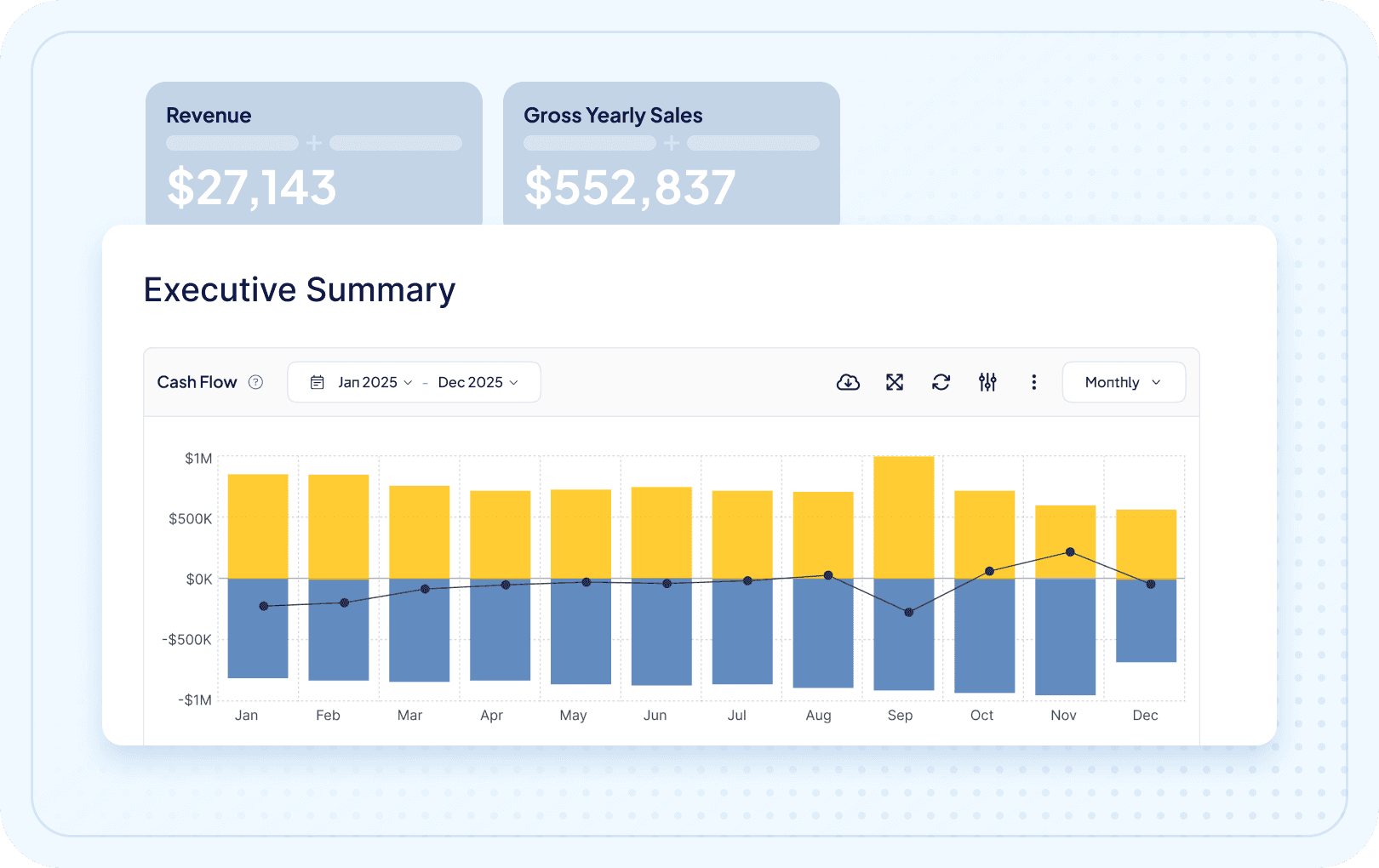
Compare planned vs actual revenue, expenses, and cash flow
Identify overperformance and shortfalls
Monitor performance across time periods
Driver-Level Analysis
Understand what’s causing financial changes across your business.
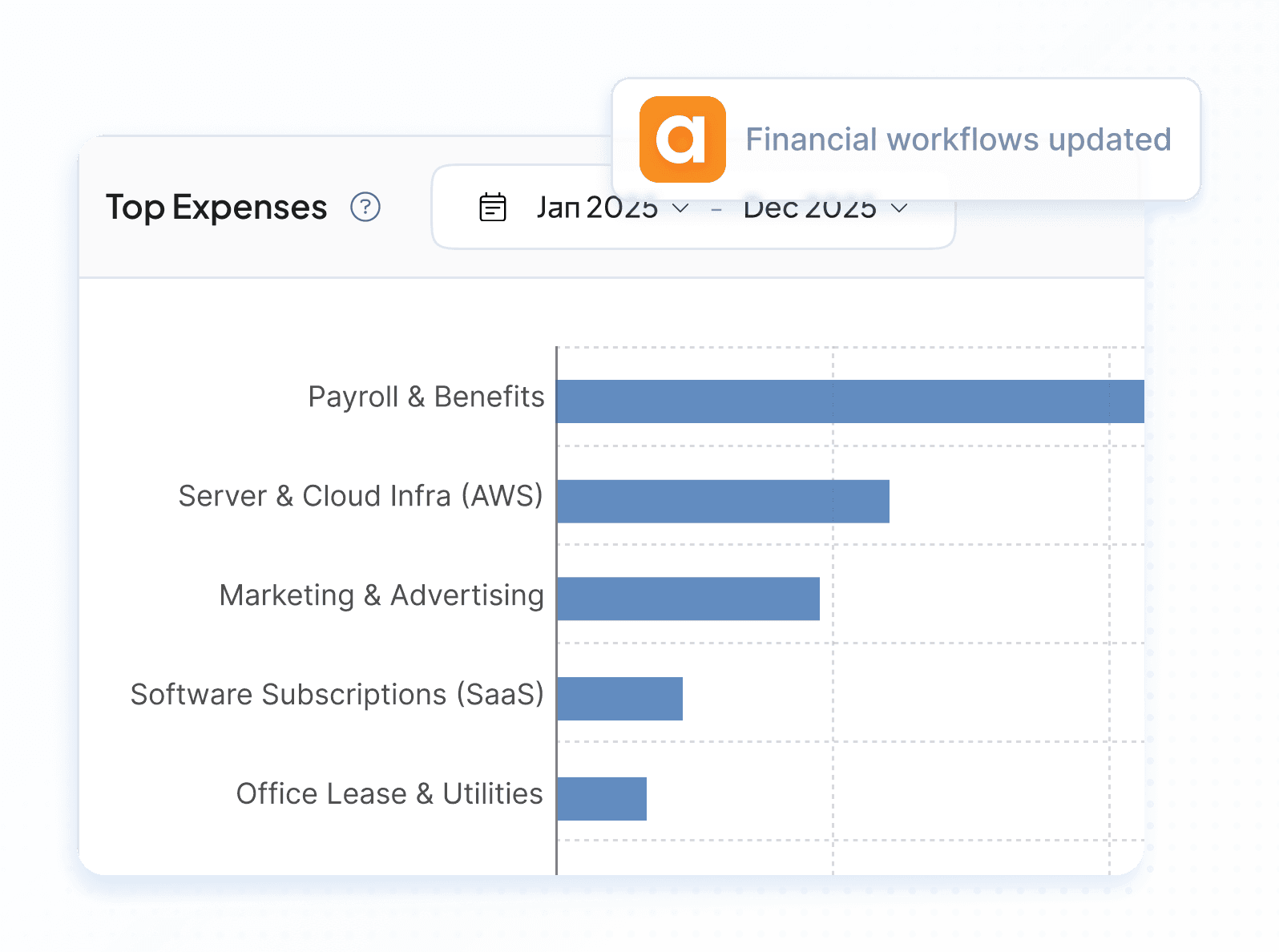
Break down variances by revenue, headcount, or expense drivers
Identify operational vs financial impacts
Analyze changes across departments or categories
Forecasting vs Actual Tracking
Evaluate how your forecasts perform against real outcomes.
Compare updated forecasts to actual results
Refine assumptions based on performance
Improve forecast accuracy over time
Regulated Finance

Why It Works
Faster Analysis
Reduce time spent reconciling numbers and identifying variances.
Improved Visibility
Better Decision Making
Infrastructure